Kobayashi Laboratory
Led by Prof. Shigeo KOBAYASHI
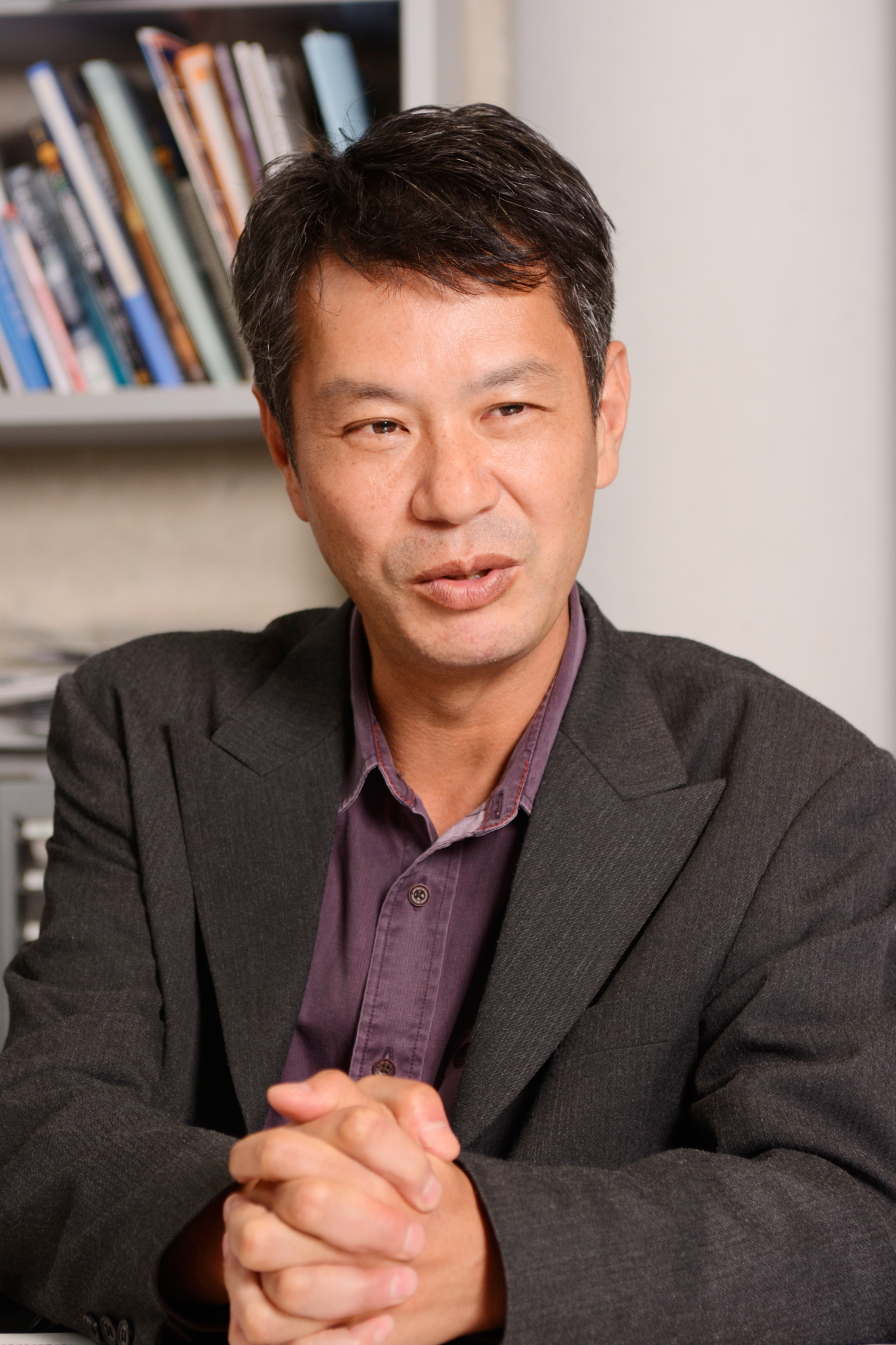
Welcome to the Kobayashi Laboratory in the Department of Architecture at Tokyo City University, led by Prof. Shigeo Kobayashi.
Our laboratory conducts comprehensive research on the relationship between light, space, human behavior, and the urban environment. We combine environmental psychology with practical lighting design, field-based observations, and social implementation.
A primary focus of our work is the nighttime urban environment: how people perceive and interact with architectural spaces and cities after dark, how lighting design contributes to local identities and townscapes, and how outdoor lighting can support safety, orientation, and evacuation in emergency situations.
Through interdisciplinary and field-oriented approaches, our laboratory collaborates closely with municipal governments, local residents, designers, academic institutions, and private organizations to create sustainable and human-centered spatial environments.
RESEARCH FIELDS
Main research themes and academic activities in our laboratory
Lighting Design & Light Environment
We investigate architectural and urban lighting environments, including public streets, waterfronts, residential areas, parks, and historic spaces. Rather than merely focusing on illuminance levels, our research explores how different lighting qualities and spectrums influence human perception, spatial experience, and behavioral dynamics.
Environmental Psychology & Human Behavior
We study the interaction between built environments and human psychological responses. Key focus areas include interpersonal communication in various spatial settings, density and visual openness, spatial cognition, and physiological/psychological responses to light.
Nighttime Urban Environment & Community Design
We engage in field research and practical lighting master planning aimed at enhancing the nighttime quality and identity of local communities. Projects encompass historic townscapes, commercial districts, waterfront promenades, and community-led lighting initiatives.
Lighting for Disaster Prevention & Evacuation
Originating from field studies after the Great East Japan Earthquake (2011), our laboratory researches how outdoor lighting can facilitate safe nighttime evacuation during disasters. We analyze route visibility, low-luminance guidance lighting, spatial orientation in darkness, and lighting strategies that bridge everyday landscapes with emergency preparedness.
LABORATORY HIGHLIGHTS
Recent research projects, design implementations, and awards
Kesennuma Reconstruction Lighting Project
The Kesennuma Reconstruction Lighting Project is a long-term urban lighting initiative in Kesennuma, Miyagi Prefecture—a city severely affected by the 2011 tsunami.
Our laboratory has contributed to developing a unified nighttime landscape encompassing public streets, waterfront seawalls, commercial plazas, and disaster evacuation routes.
The initiative emphasizes co-creation among local residents, municipal authorities, local businesses, and lighting professionals.
2025 — Award of Excellence, JSCE Design Award (Japan Society of Civil Engineers)
JSCE Design Award: Kesennuma Reconstruction Lighting Project →
Kesennuma Inner Bay Waterfront Lighting
Lighting design and environmental planning for the waterfront districts of Uomachi, Minamimachi, and Minatomachi in Kesennuma. The project demonstrates how lighting can enhance the identity of a coastal townscape while serving daily civic life and emergency resilience.
2023 — Lighting Facilities Award, Illuminating Engineering Institute of Japan (IEIJ).
Cherry Blossom Light-Up along the Nomikawa Greenway
A neighborhood lighting initiative along the cherry tree-lined Nomikawa greenway near Toritsu-Daigaku Station. The project evaluates how temporary seasonal lighting influences local social interaction, environmental perception, and community engagement.
2024 — Special Jury Award, Tokyo Branch Selection Committee, IEIJ.
PROJECT ARCHIVE
Selected urban lighting and community planning projects by our laboratory
- Kaneyama Town, Yamagata — Master plan for nighttime townscape and street lighting (2014–)
- Kesennuma, Miyagi — Post-disaster reconstruction lighting and waterfront lighting plan
- Kamaishi, Iwate — Lighting design for nighttime disaster evacuation routes (2011–2014)
- Hachioji (Tokyo) & Yatsuo (Toyama) — Field experiments on street lighting and environmental psychological evaluation
- Atagawa Hot Spring, Shizuoka — Lighting strategy for hot spring townscape revitalization (2016–2018)
- Hirase, Shirakawa, Gifu — Street lighting design for rural settlement environments
- Gokayama, Toyama — Illumination planning for the Ainokura Gassho-style Village
- Yamate, Yokohama — Illumination design for historic Western-style architecture
EVACUATION & LIGHTING RESEARCH
Empirical studies on nighttime spatial cognition and evacuation behavior
Effective emergency lighting extends beyond merely increasing brightness.
During nighttime evacuations, individuals must navigate complex urban environments, recognizing street intersections, elevation changes, surrounding structures, and safety landmarks.
Our research focuses on low-luminance lighting solutions, spatial orientation in degraded visual conditions, and lighting designs that integrate seamlessly into the daily urban context while functioning effectively during emergencies.
EDUCATION & WORKSHOPS
Student-led fieldwork, experimental installations, and community workshops
In our laboratory, students actively participate in field surveys, full-scale mockup experiments, lighting installations, and workshops in collaboration with local communities. Through hands-on projects, students gain practical insight into solving architectural and urban challenges using lighting design and environmental psychology.
- Campus Illumination Projects
- Street lighting experiments in public spaces
- Community-based field workshops and surveys
URBAN PSYCHOLOGY & GRAFFITI
Research on urban boundary conditions, graffiti, and environmental psychology
In addition to lighting research, our laboratory conducts empirical studies on urban graffiti, window-shading behavior, visual openness, and environmental psychology in public and residential spaces.
LAS VEGAS RESEARCH ARCHIVE
Field studies on artificial light and nighttime commercial environments
Las Vegas serves as a significant case study for understanding how artificial light, commercial activities, architecture, and human behavior intersect in an intense nighttime urban setting.
Our research archive documents the unique lighting strategies and spatial dynamics of Las Vegas's nighttime landscape.
MAJOR AWARDS & HONORS
- 2025 — Award of Excellence, JSCE Design Award (Japan Society of Civil Engineers), Kesennuma Reconstruction Lighting Project
- 2024 — Special Jury Award, Tokyo Branch, Illuminating Engineering Institute of Japan (IEIJ), Cherry Blossom Light-Up along Nomikawa Greenway
- 2023 — Lighting Facilities Award, IEIJ, Kesennuma Inner Bay Waterfront
- 2020 — Excellence Award, Urban Landscape Award (Ministry of Land, Infrastructure, Transport and Tourism), Nighttime Landscape Development in Kaneyama Town
- 2019 — Lighting Popularization Award, IEIJ, Showakai / Kesennuma Station Area
- 2018 — Tokyu Group Environmental Award (Idea Award), Low-Level Lighting Renovation at Tateshina Resort Town
- 2015 — Kids Design Award, Hisanohama Yume-Akari Project
- 2014 — SDA Sign Design Award, Lighting Environment for Promoting Evacuation to Higher Ground
- 2008 — Lighting Design Award, IEIJ
- 2008 — IESNA International Lighting Design Award (Award of Merit)
PUBLICATIONS & CV
For a comprehensive list of research papers, books, conference presentations, and Professor Kobayashi's curriculum vitae: